
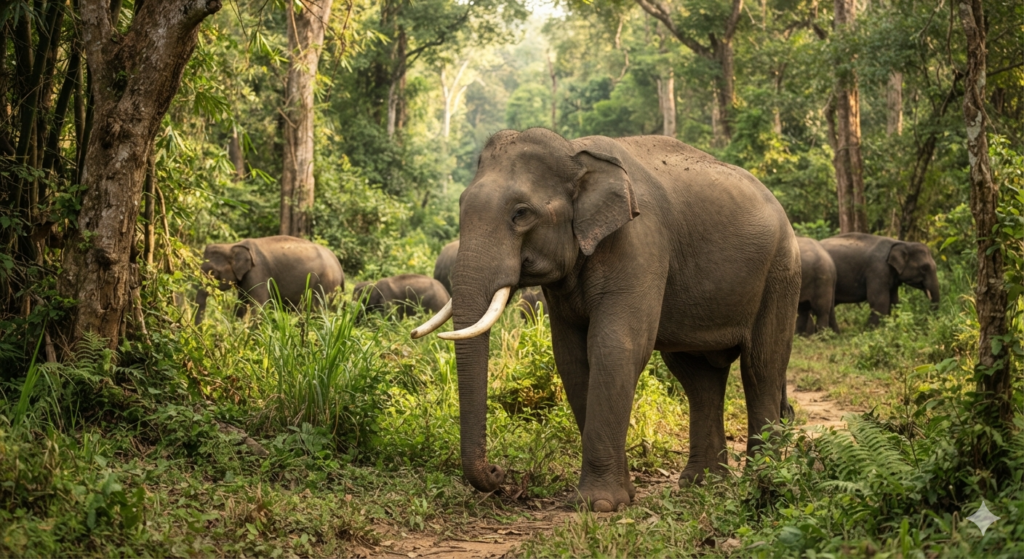

Imagine walking through a quiet, green forest and hearing a deep rumble that shakes the ground beneath your feet. Suddenly, a giant, gentle creature appears from behind the trees. This beautiful animal is the majestic Indian elephants. For thousands of years, these giants have been a major part of Asian culture, history, and storytelling. They are famous for their high intelligence, deep emotions, and incredible strength. But how much do we actually know about them?
In this complete guide, we will explore the wonderful world of indian elephants. We will look at how they live, what makes them unique, and the serious challenges they face in the wild today. From their amazing trunks to their secret ways of talking, these animals are full of surprises. Let us dive in and learn all about these spectacular land mammals.
What Exactly Are Indian Elephants?
The indian elephants are a special subspecies of the Asian elephant. Scientists call them Elephas maximus indicus. They are the second-largest land animals on Earth, right behind their cousins from Africa. These beautiful animals have a large, rounded body, a curved back, and an incredibly long trunk that acts like an extra hand.
These creatures are highly social and live in close families called herds. An old, wise female elephant leads each herd, and she is called the matriarch. These giants are also known as “forest engineers”. They help change the forest by knocking down old trees, creating pathways, and spreading seeds through their dung. Without them, many wild spaces would fall apart.
Where Do Indian Elephants Live in the Wild?
If you want to know where do indian elephants live, you have to look across the continent of Asia. Even though their name points to India, these animals live in several other neighboring countries too. You can find them roaming through parts of Nepal, Bhutan, Bangladesh, Myanmar, Thailand, and Malaysia.
These mammals love a mix of different living spaces. They are happiest in dense, green tropical forests, dry woodlands, and wide open grasslands. The most important thing for them is staying very close to fresh water. They need to drink water at least once every day, and they love to splash around to stay cool.
Do Indian Elephants Have Tusks Like Other Elephants?
A very common question people ask is, do indian elephants have tusks? The answer is quite unique compared to other elephant types. In the world of indian elephants, only some of the male elephants grow long, beautiful ivory tusks. Female elephants do not grow long tusks at all. Instead, females sometimes have tiny, hidden teeth called “tushes” that you can barely see.
INDIAN ELEPHANTS TUSK RULES:
• Males ——> Can grow long ivory tusks (Some are tuskless)
• Females —-> No long tusks (Only tiny hidden “tushes”)
Interestingly, not even every single male grows them. The male elephants that never grow tusks are called makhnas. For the males that do have them, these ivory tusks are very useful tools. They use them to dig deep for water, peel tasty bark off forest trees, and protect their families from danger.
How Long Do Indian Elephants Live on Average?
If you are wondering how long do indian elephants live, they actually have a very long life path. In the wild, healthy indian elephants can easily live for 60 to 70 years. This long lifespan is very similar to the lifespan of humans, which means they grow, learn, and age just like we do.
Their life depends heavily on their teeth and their habitat. As elephants grow older, their large chewing teeth wear down. They grow new sets of teeth throughout their life, but once the final set wears away, it becomes hard for them to chew tough plants. In safe conservation areas or well-kept nature camps, they can sometimes live even longer because humans help prepare soft food for them.
Fun and Amazing Facts About Indian Elephants
There are so many wonderful facts about indian elephants that show how cool they really are. For example, did you know that their trunk has over 40,000 individual muscles in it? That is why the trunk is strong enough to lift heavy logs but gentle enough to pick up a single blade of grass.
Another amazing fact is that they use mud as a natural sunscreen. Their skin is thick, but it can still get sunburned and bitten by pesky bugs. By throwing mud and dust over their backs, they create a protective shield. They are also fantastic swimmers and can use their trunks like snorkels to breathe underwater!
Are Indian Elephants Endangered in Today’s World?
Sadly, if you look at the official global animal records, are indian elephants endangered is a question with a clear “yes”. The International Union for Conservation of Nature (IUCN) has listed them as an endangered species for many years. Their total numbers in the wild have dropped by over 50 percent over the last few generations.
Today, experts believe there are only around 20,000 to 40,000 indian elephants left living in the wild spaces of Asia. This is a very small number for such an important animal. Conservation groups all over the world are working hard to protect them, but their future is still at great risk.
Why Are Indian Elephants Endangered Right Now?
To truly help them, we must understand why are indian elephants endangered. The absolute biggest threat they face is habitat loss. As human cities grow, people cut down wild forests to build houses, plant crops, and make long roads. This breaks the forest into tiny pieces, leaving the elephants with no room to move around.
THE BIG THREATS TO ELEPHANTS:
1. Lost Forests (Building roads and towns)
2. Hungry Crop Raids (Clashes with local farmers)
3. Illegal Hunting (Poaching for ivory tusks)
Another serious problem is illegal hunting, which is also known as poaching. Bad guys hunt male elephants for their ivory tusks to sell them on the black market. Because their forests are shrinking, hungry elephants also walk into human farms to eat crops like bananas and rice. This causes dangerous clashes where both humans and elephants get hurt.
The Big Difference Between African and Indian Elephants
When looking at african and indian elephants, they might seem identical at first glance, but they are actually very different. The difference between african and indian elephants starts with their physical size. African elephants are much larger and heavier than their Asian relatives.
The shape of their body is also a giveaway. An Indian elephant has a twin-domed head with a high crown, while an African elephant has a flatter, more rounded head. Their backs look different too; the Indian species has a humped or straight back, whereas the African species has a dipped, concave back.
Detailed Comparison: Indian Elephants vs African Elephants
Let us break down the battle of indian elephants vs african elephants even further by looking at their ears and trunks. The ears of an African elephant are massive and look exactly like the shape of the African continent. On the other side, the ears of the Indian elephant are much smaller and look like the map of India!
Their trunks have different tips too. The African elephant trunk has two finger-like lips at the very end to grab food. The Indian elephant trunk only has one single finger-like lip at the bottom, which they use to wrap around branches.
Elephant Biography Profile: Quick Specifications Table
To make everything crystal clear, let us look at a quick specifications table that sums up the life profile of these amazing creatures.
| Physical Feature | Indian Elephant Profile Details |
| Common Name | Indian Elephant (Subspecies of Asian Elephant) |
| Scientific Name | Elephas maximus indicus |
| Average Weight | 2,700 to 5,000 kilograms (Up to 5 tons) |
| Shoulder Height | 7 to 11 feet tall |
| Wild Lifespan | 60 to 70 years |
| Daily Food Needs | Up to 150 kilograms of grass, bark, and leaves |
| Global Status | Endangered Species (IUCN Red List) |
How We Can Help Protect These Gentle Giants
Protecting the future of indian elephants is something we can all help with. Governments and wildlife charity groups are building special “elephant corridors”. These corridors are safe paths of forest that connect isolated areas, allowing elephant families to travel safely without walking into human towns or crossing busy roads.
You can help by supporting honest wildlife groups that protect natural forests and fight against illegal ivory hunting. Spreading the word, choosing sustainable products that do not destroy rainforests, and learning about these creatures are wonderful ways to make sure they roam our Earth forever.
Conclusion
The story of the indian elephants is a powerful reminder of how beautiful and fragile our natural world truly is. These gentle forest engineers play a vital role in keeping Asian ecosystems healthy, green, and alive. From their intelligent minds and deep family bonds to the unique ways they use their trunks and tusks, they are truly unlike any other creatures on Earth.
Frequently Asked Questions
Q1: Do indian elephants have tusks if they are female?
No, female indian elephants do not grow long ivory tusks. Only some of the male elephants grow them. Females sometimes have tiny, short teeth called tushes, but these are usually hidden inside their mouths.
Q2: Exactly where do indian elephants live in Asia?
They live in the wild across several mainland Asian nations. While the largest group lives in India, you can also find them in the forests and grasslands of Nepal, Bhutan, Myanmar, Thailand, Laos, and Malaysia.
Q3: Are indian elephants endangered today?
Yes, they are officially listed as an endangered species. Their wild populations have fallen quickly over the years because humans are taking over their forest homes and poachers hunt them for ivory.
Q4: What is the main difference between african and indian elephants?
The main differences are their size, ears, and heads. African elephants are larger, have huge ears shaped like Africa, and have two lips on their trunk. Indian elephants are smaller, have small ears, a double-domed head, and one trunk lip.
Q5: Why are indian elephants endangered?
They are endangered because their forest homes are being cut down to build farms, roads, and houses. This forces them into conflict with local farmers. They are also hunted illegally by poachers for their ivory tusks.
Q6: How long do indian elephants live in the wild?
When they are healthy and have plenty of food, indian elephants can live for 60 to 70 years. They have a very long life pattern that is quite similar to human lifespans.