
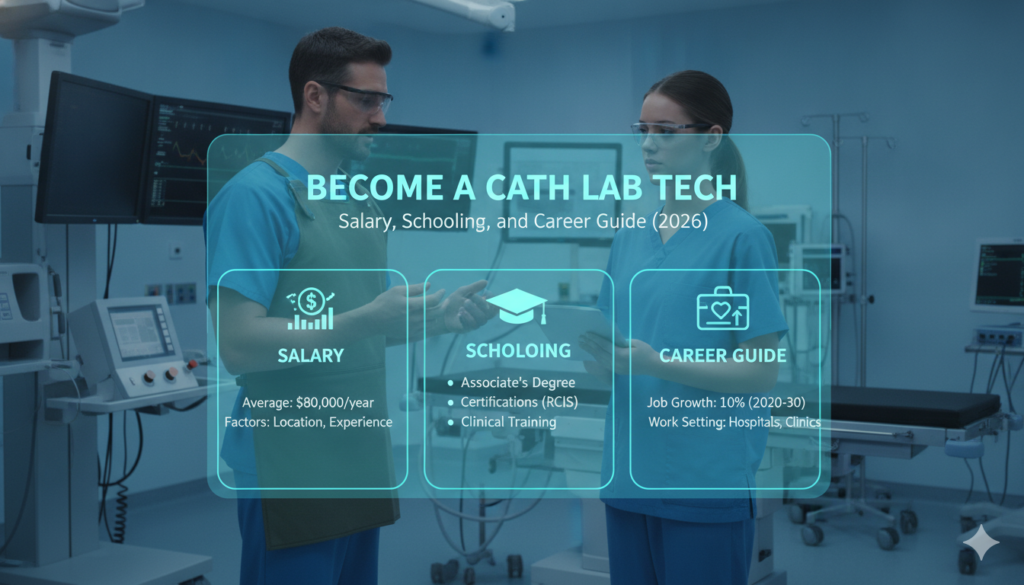

Have you ever wondered who helps doctors during heart procedures? Meet the cath lab tech. These professionals are heroes in the hospital. They work in rooms called catheterization labs. Their main goal is to help patients with heart issues. If you like technology and helping people, this job is for you. This career path is exciting and very rewarding. Every day, you help save lives using advanced tools. Let’s look at what this role is really like today.
What Is a Cath Lab Tech?
A cath lab tech is a specialized member of the medical team. They work closely with cardiologists. These doctors specialize in heart health. A cardiac cath lab tech helps during tests and surgeries. They make sure the lab is ready for action. They are the eyes and ears for the doctor during procedures. Without them, the team would struggle to perform important heart work. They bridge the gap between complex machines and patient care.
What Does a Cath Lab Tech Do?
You might ask, what does a cath lab tech do all day? Their work is very hands-on. They prep patients before a procedure starts. This includes checking vital signs and starting IV lines. During surgery, they watch monitors that show the heart’s activity. They also operate X-ray machines to guide the doctor. If an emergency happens, they must act fast to save the patient. It is a busy, fast-paced environment where every second counts.
How to Become a Cath Lab Tech
Thinking about how to become a cath lab tech? It takes some dedication and training. First, you need to finish high school with good grades. Then, you should look for a cath lab tech school. Most students earn an associate degree in cardiovascular technology. During your training, you will learn about heart anatomy. You will also get hands-on experience in a real hospital setting. This practice is key to feeling confident in the lab later.
Understanding Cath Lab Tech Certification
To be the best, you need cath lab tech certification. This shows employers you have the right skills. One common credential is the Registered Cardiovascular Invasive Specialist (RCIS). You get this by passing a national board exam. Having this certificate makes you stand out when applying for roles. It tells the hospital you follow high standards of safety. Plus, it can help you get a better job much faster.
Exploring Cath Lab Tech Salary Expectations
Many people are curious about the cath lab tech salary. Pay varies based on where you live and your experience. On average, these professionals earn a competitive wage because of their specialized skills. In the United States, the average annual pay is around $76,901, though some earn much more. If you have more years of experience, your salary will likely go up. It is a stable career with good financial growth potential.
Finding Cath Lab Tech Jobs
Are you ready to look for cath lab tech jobs? Hospitals and heart centers are always hiring. You can search online job boards for open positions in your area. Many facilities look for techs who are calm under pressure. Highlight your clinical rotations and certifications on your resume. Networking with others in the field can also help you find great openings. Keep an eye on local hospital websites for the newest postings.
The Life of a Travel Cath Lab Tech
Do you like to see new places? You might love being a travel cath lab tech. These professionals go to different cities for short-term work. It is a great way to gain diverse experience. Travel techs often earn higher pay than permanent staff. You get to see the country while helping many different patients. It takes a flexible personality, but many find it to be a very fun adventure.
Cath Lab Tech Career Summary Table
| Category | Description |
| Education | Associate degree in Cardiovascular Technology |
| Typical Training | 2 to 4 years total |
| Key Certification | RCIS (Registered Cardiovascular Invasive Specialist) |
| Work Setting | Hospital catheterization labs |
| Core Skills | Imaging, patient monitoring, and emergency support |
FAQs
Is becoming a cath lab tech hard?
It requires focus and study, but it is very manageable with the right school program.
Do I need a degree to be a tech?
Yes, most employers prefer or require an associate degree in a related health field.
What is the most important skill?
Staying calm in emergencies is vital because you work in high-stakes situations.
How long does the training take?
Most programs take about 2 to 4 years including clinical rotations.
Can I work in different states?
Yes, especially if you are a travel cath lab tech, though you may need to check state licenses.
Does the pay increase with experience?
Absolutely, experienced techs often move into leadership or specialty roles with higher pay.
Conclusion
Being a cath lab tech is a noble and exciting way to build a career. You get to use cool technology to help fix hearts every single day. By getting your degree and certification, you open doors to great job security. Whether you stay local or travel, you will always be in demand. Start your journey today by looking into local programs. Does this sound like the right path for your future? We would love to hear your thoughts in the comments below!